
Zero Latency in Motion Simulators
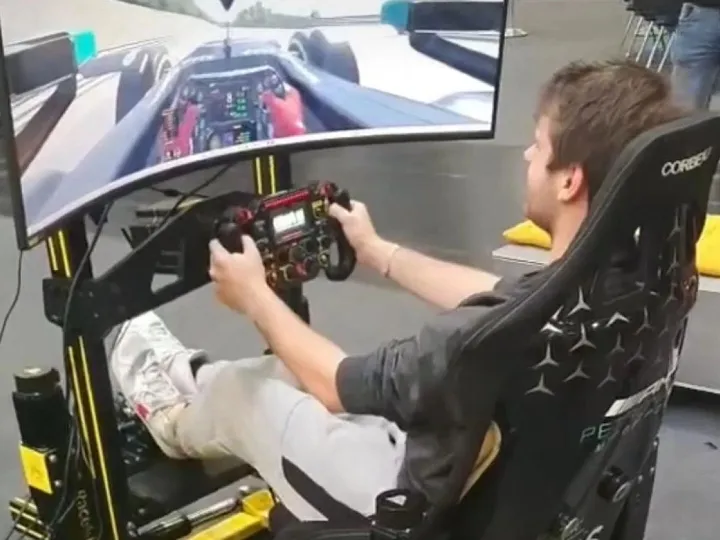
Zero latency sets the benchmark
Every sim racer knows there’s a precise moment, maybe in the middle of a fast lap on Silverstone or perhaps when navigating the unpredictable camber of Brands Hatch’s Paddock Hill, where you lose track of the fact you’re in a simulation and react as if you’re driving on track. That moment relies heavily on one technical principle: zero latency. For motion platforms, it’s the secret sauce behind creating an immersive experience. If the platform hesitates, even slightly, the car in your head feels disconnected from the one beneath you.
A modern sim racing motion platform aims to eliminate this disconnect. Whether you swear by F1 or GT racing, you want the seat, the pedals, and the wheel to react instantly to throttle and steering input. The very best rigs, those performing at the “full-motion racing rig” level, deliver real-time motion; it’s what transforms a practice session into genuine skill-building under pressure.
A tiny delay, a big difference
It helps to explain latency in everyday terms before delving too deeply into the technical aspects. Latency is the time delay between the moment your racing software sends physics data to your motion platform and when you actually feel the result. In human terms, anything less than 15 milliseconds is almost impossible to notice; yet, most racers and engineers agree that even a slight lag can throw off braking points, affect muscle memory, and make the difference between qualifying well and spinning into a gravel trap.
For sim rigs in the UK, where fast broadband and quality hardware now come as standard, zero latency is expected—not just a selling point. That means the motion system responds within 2 or 3 milliseconds, often before your nervous system registers visual cues. Whether it’s the classic Stewart platform under your cockpit or a modern servo-powered system, zero latency keeps you focused on driving rather than compensating for equipment quirks.
How motion rigs achieve real-time response
Open up most professional rigs, and at the heart of the system, you’ll find high-powered actuators—either electric (most commonly linear actuators for precision and speed) or sometimes hydraulic, reserved for commercial and industrial platforms. These actuators are paired with sophisticated controllers—such as those produced by specialist motion brands—that can process telemetry data and trigger physical movement at lightning speed.
In technical terms, the control system analyses thousands of data points per second: g-forces, acceleration, braking, and road surface irregularities. The software turns those signals into instantaneous instructions. The best sim racing motion platforms use “closed loop” feedback, meaning the controller constantly monitors position and adjusts signals to correct for overshoot or vibration. It’s the difference between feeling like you’re swaying gently on a tube train (old systems) or being strapped into a real Le Mans prototype (modern full-motion racing rig designs).
Calibration is where artistry meets engineering. Each degree of freedom (pitch, roll, heave, yaw, surge, and sway) is carefully mapped to match the physical sensations encountered in real-world driving. Hindering motion with poor mounting, faulty software, or underpowered motors can introduce noticeable lag, breaking immersion immediately. In fact, many UK sim hardware moaners will blame “bad motion tuning” for their lack of pace before blaming themselves.
Installation, calibration, and system selection
It’s no secret that installing a full-motion rig isn’t plug-and-play. Many drivers, especially those moving from basic cockpit setups, wonder if they really need a six-axis behemoth to “feel” every bump and crest. The honest answer: not always. Even a well-tuned 3DOF setup can deliver believable steering and braking feedback, but complexity improves fidelity. The distinction arises when calibration begins. Good calibration ensures every actuator operates in perfect harmony.
Physical installation should begin with a strong frame, ideally a high-grade aluminium extrusion. Mounts matter: anything not square or reinforced can flex, and any flex will introduce lag as the rig absorbs motion not designed into the system. Software calibration, meanwhile, requires patience. The best kits include tools and guides to help align actuator movement with game telemetry. Many brands offer remote support or UK-based service teams who can help fine-tune the platform for your space and needs.
Common queries in forums and among buyers address integration—does my platform work with Assetto Corsa, iRacing, or F1 2025? Will adding a new actuator throw off balance and increase latency? Generally, reputable brands (and home-grown UK engineering shops) have developed robust plug-ins and controller boards that handle regular game updates and hardware tweaks without sacrificing instant response.
Where motion rig technology is going
Looking ahead, it’s clear that zero latency is no longer just an engineering challenge. It’s become a battleground for product differentiation. British developers and international platforms are pushing boundaries with smarter actuators, AI-driven calibration, and real-time VR integration. As virtual reality becomes standard in serious racing circles, any delay between headset visuals and platform movement can cause motion sickness and ruin immersion. Motion compensation technology, pioneered by some leading UK and European software outfits, now synchronises headset movement with the physical platform, keeping both perfectly aligned.
What does this mean for buyers? First, it has never been more critical to verify specifications. Brands like D-BOX, Qubic System, and thelocally engineered LowSlider from Race@Home have set new standards for motion fidelity. Look for latency specs under 10 milliseconds, actuator-feedback systems with closed-loop control, and software compatibility with modern racing sims. Second, expect user-driven improvements. Enthusiast forums and community channels are fueling a wave of open-source upgrades and enhancements to motion software. Those investing in a “full-motion racing rig” today are as likely to upgrade tomorrow, chasing that ever-elusive sensation of pure motorsport immersion.
And finally, don’t underestimate the soft benefits. Zero latency isn’t just about realism; it builds driving skill, improves lap time consistency, and lets you train like the pros. For B2B buyers and commercial operators in the UK and beyond, investing in instant-response motion platforms means fewer customer complaints, more repeat visits, and better feedback from driver training sessions.
Read More: Upgrading Your Sim Rig | Motion Rigs Make It Real
About Us
Race@home launched in 2020, offering immediate shipment of high-end sim hardware to frustrated customers. Our acclaimed LowRider 5DOF and new LowSlider 6DOF platforms prioritise compact excellence.
Contact Us
raceathome@gmail.com
+447988775662
Leicester, United Kingdom
WhatsApp
Instagram
Facebook
TrustPilot
YouTube