
Pimax Crystal Light Headset Buyer's Guide
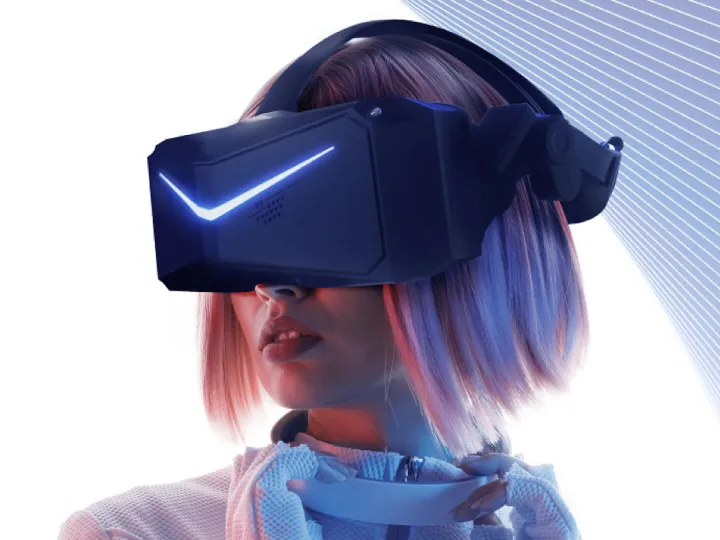
The Pimax Crystal Light is one of the sharpest consumer PCVR headsets you can buy today, but that clarity comes with trade-offs in weight, comfort and ease of use, especially for long F1 or rally sessions on a home rig. Compared with rivals like Meta Quest 3 and older favourites such as HP Reverb G2, as well as its bigger brothers in the Pimax Crystal range, it sits in a sweet spot for image quality and price, provided you are prepared to live with a more demanding setup and a heavier headset.
We have spent years building and refining home racing simulators, from simple desk-mounted wheels to full aluminium-profile rigs with load-cell pedals and direct-drive bases, so we are picky about anything that sits between us and the tarmac.
After spending hours with the Pimax Crystal Light in F1 and rally sims, including modern titles that really push a GPU, it is clear that this headset is aimed squarely at people who care more about clarity, resolution and field of view than they do about absolute comfort or plug-and-play convenience.
The Crystal Light delivers 2880 by 2880 pixels per eye through glass aspheric lenses, paired with a QLED plus Mini LED display and optional local dimming, which makes night stages, overcast Spa runs and shaded forest rally sections look impressively deep and realistic.
At the same time, it uses inside-out tracking and PCVR-only connectivity over DisplayPort rather than trying to be a standalone device, so you are tethered to a powerful PC but rewarded with a cleaner image and higher refresh rates up to 120 hertz.
We looked at how the Crystal Light behaves in everyday sim use, how it compares to the original Crystal and the newer Crystal Super, and where it stands against common competitors like Quest 3 and Reverb G2 when you care about price, comfort, audio, tracking, installation and long race sessions rather than casual room scale games.
Design, build and comfort on the rig
Physically, the Pimax Crystal Light is a substantial piece of hardware, and you feel that the moment you clip it onto your rig and settle into the seat. The headset weighs around 815 grams before you add cables, which is noticeably heavier than a Meta Quest 3 and somewhat bulkier than an HP Reverb G2. That extra mass becomes noticeable during long races, especially if your head strap is not perfectly adjusted.
Pimax has done some work to make the Light more accessible than the original Crystal by removing eye-tracking hardware and the rear battery pack, which not only reduces weight but also simplifies the balance, yet the shell still feels large and slightly clunky compared with more compact rivals.
With an upright seat position, the weight is manageable, and the pressure is mostly across the forehead and the back of the head. During aggressive rally stages with greater head movement, you become more aware of the front-heavy design and may find yourself taking short breaks between stages.
The manual IPD range from 58 to 72 millimetres combined with the large sweet spot from the glass aspheric lenses means that once you dial it in, the image is stable and sharp across much of the field of view, but the size of the housing and facial interface will not suit every head shape and you may need some tinkering with padding to avoid hotspots.
Image quality, resolution and field of view
The reason sim racers tolerate that extra bulk is simple: the image the Crystal Light produces is extremely sharp by current standards. With 2880 by 2880 pixels per eye and roughly 35 pixels per degree, the headset delivers a level of clarity that makes reading distant braking boards, pit entry signage and small elements on the steering wheel display much easier than on Quest 3-level hardware and noticeably crisper than an HP Reverb G2.
The QLED plus Mini LED panel with optional local dimming does a particularly good job with contrast, so night races in F1 feel less washed out, trackside lighting pops more convincingly and the transition from well-lit pit lane to darker back sections has more nuance than headsets using simpler LCD panels.
Field of view is wide rather than ultra-wide, with horizontal measurements published around 105 to 115 degrees depending on the source, which in practice gives you enough peripheral information to judge apex placement and mid-corner rotation without feeling restricted, though it is not as enveloping as the ultra-wide option that Pimax reserves for the Crystal Super.
Compared with the original Crystal, which shares the same resolution but is heavier and more feature-rich, the Light feels like a streamlined version focused on delivering the same sharp picture and wide field of view at a lower price point, with slightly better performance thanks to simplified optics and fixed foveated rendering.
Performance in F1 and rally simulations
In F1 simulations, the clarity pays off immediately when you are tucked behind another car at 300 kilometres per hour and trying to pick out subtle trackside reference points while simultaneously reading delta times and tyre information from your wheel display.
On the Crystal Light, these elements remain legible at a glance, and the combination of high resolution and smooth refresh rates up to 120 hertz makes camera shake and vibration feel more natural rather than distracting, assuming your PC meets or exceeds the recommended specifications.
The fixed foveated rendering helps maintain performance without drawing attention to itself, and on my system, that is roughly equivalent to the minimum guideline of an RTX 3070-class GPU and a modern Intel i5 or better; frame pacing remains consistent during heavy weather events like full wet conditions and safety car periods.
In rally titles, the headset really earns its keep; forest stages and narrow mountain roads benefit from the deeper blacks and local dimming, while the wide field of view allows you to judge slides and recoveries by peripheral motion rather than relying solely on motion cues from the rig.
Compared to a Quest 3 used in PCVR mode, the Crystal Light yields a noticeably cleaner image with fewer compression artefacts because you are driving a pure DisplayPort connection instead of relying on wireless streaming or USB tethering, though that does mean you lose the standalone convenience that makes the Quest so easy to recommend for non-sim use.
Tracking comfort and the need for base stations
Tracking is handled via inside-out cameras on the Crystal Light, with six degrees of freedom and no requirement for external base stations unless you choose to add a Lighthouse faceplate later. For a seated sim rig, this inside-out solution is entirely adequate; head tracking remains stable even when you are looking over your shoulder down the straight at Monza or flicking the car across blind crests in a rally stage, and the absence of base stations simplifies both installation and ongoing use.
This design makes the headset feel more plug-and-play than the older generation of high-end PCVR devices that insisted on SteamVR base stations, and it is one of the reasons the Light is marketed as the more accessible entry into the Crystal family.
The trade-off is that controller-tracking for room-scale experiences remains an area where external tracking can still offer advantages, but in the specific context of home racing simulators where your hands are locked to a wheel and shifter most of the time, the inside-out system is more than sufficient.
Comfort after multiple stints is strongly linked to how well your rig supports your head and neck; sim rigs with higher-quality seats and better headrests make the 815-gram weight far less problematic, while simpler chairs will quickly highlight the headset shell's clunkiness compared with leaner alternatives.
Setup, connectivity and software experience
The Crystal Light is a pure PCVR device that relies on a DisplayPort 1.4a cable, USB 3.0, and external power, so you should expect a more involved setup than with something like a Quest 3, which can go fully wireless. For desktops, the requirement is straightforward: you need a modern GPU with a free DisplayPort 1.4a-compliant port and the latest drivers.
For laptops, Pimax notes that direct GPU output to Mini DisplayPort or USB-C is essential, along with an adapter capable of carrying 8K 60-hertz equivalent bandwidth. In practice, once the cables are connected, the software side is similar to other PCVR headsets: you run Pimax Play to handle firmware, device configuration, foveated rendering options and general performance, then integrate with SteamVR or your store of choice to launch F1 or rally titles.
The setup is not especially difficult but is more finicky than plug-and-play consoles; you must be comfortable checking GPU outputs, updating drivers and occasionally troubleshooting tracking quirks or audio behaviour, which fits the typical profile of a serious sim racer rather than a casual user.
Compared with the original Crystal and Crystal Super, the Light has a slightly more streamlined personality, less hardware complexity, no eye tracking and fewer special features to configure, which helps keep installation time relatively reasonable for someone who already has a PCVR-ready rig.
Audio quality and overall immersion
Audio on the Crystal Light is integrated into the headset, with a 3.5-millimetre jack for your own headphones, and two microphones for multiplayer comms. Many reviewers describe it as solid, though not class-leading.
For sim racing, the stock audio is perfectly usable: engine notes have enough body, tyre scrubbing and kerb hits are easy to distinguish, and positional cues for nearby cars are clear enough to judge overlap into braking zones. Dedicated audiophile headphones still offer a more immersive soundstage.
Microphone quality is serviceable for team radio calls with friends in endurance events, and the integrated nature reduces cable clutter, which is welcome on rigs that already have wires for pedals, wheels and shifters.
Compared with the HP Reverb G2, which remains respected for its off-ear audio solution, the Crystal Light does not quite match that airy, spacious feel yet surpasses many lower-cost headsets that treat audio as an afterthought and rely on basic straps or poor-quality speakers.
When you combine the decent audio, very high resolution and wide field of view with a well-tuned FFB wheel and motion-enabled rig, the resulting immersion is deeply convincing, particularly in cockpit views where you spend most of your time reading fine detail from dashboards and mirrors.
Price value and comparison with rivals
Pricing for the Pimax Crystal Light positions it as a high-end, not ultra-premium, PCVR option, with official figures around £860 (with unlocking subscription). Price-tracking sites list it roughly in the middle of the market, more expensive than a Meta Quest 3, which undercuts it significantly, yet far cheaper than the Crystal Super and other top-tier devices that push well beyond £1,000.
That means the Light is not a budget headset and still demands a powerful PC to shine, but it offers one of the most cost-effective routes to native 4K-class image quality and wide field of view in consumer PCVR when you factor in its resolution, pixels per degree and feature set.
Compared with the original Crystal, it is a more affordable, lighter and slightly more accessible option that retains the core visual strengths, while the Crystal Super layers on higher resolution, eye tracking and ultra-wide field of view at a significant price premium better suited to enthusiasts chasing the absolute cutting edge.
From the perspective of a home sim racer who already spends heavily on wheels and pedals, the Crystal Light feels like a sensible investment that upgrades the visual side of the rig without entering absurd cost territory, provided you are happy to sacrifice standalone functionality and accept a heavier headset than mainstream options.
Final thoughts for home racing enthusiasts
After extended use in F1 and rally simulations, the Pimax Crystal Light has proven to be a powerful visual upgrade that slots naturally into a serious home racing setup, even if it never quite reaches the effortless comfort and simplicity of more mainstream VR headsets.
Its combination of 2880 by 2880 resolution per eye, aspheric glass lenses, QLED plus Mini LED display and wide field of view produces a sharp, deeply immersive image that makes competitive racing more precise and enjoyable, bringing small details like braking markers, tyre behaviour and dashboard readouts into clearer focus.
Against rivals such as Meta Quest 3 and HP Reverb G2, it trades the convenience of standalone use and lighter weight for superior clarity and a clean DisplayPort connection, which makes sense if your primary use is seated sim racing rather than casual wireless play sessions.
Within the Pimax family, it serves as the practical enthusiast choice, delivering most of the original Crystal experience at a lower cost and without the eye-tracking and battery complexity of the more expensive Crystal Super, which remains attractive only if you need an ultra-wide field of view and maximum resolution at any price.
If you already own or plan to build a capable gaming PC and you are willing to accept a heavier headset in exchange for market-leading clarity, the Pimax Crystal Light is easy to recommend as the visual centrepiece of a modern home racing simulator, and I would suggest adding it to your shortlist and checking that your GPU, rig ergonomics and budget all line up before making the jump.
About Us
Race@home launched in 2020, offering immediate shipment of high-end sim hardware to frustrated customers. Our acclaimed LowRider 5DOF and new LowSlider 6DOF platforms prioritise compact excellence.
Contact Us
raceathome@gmail.com
+447988775662
Leicester, United Kingdom
WhatsApp
Instagram
Facebook
TrustPilot
YouTube